Showing posts with label film. Show all posts

Thursday, January 25, 2018

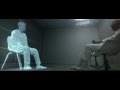
"Walking in Dream" from "The Last Wave"


Two movies are the top of my must have list: "The Wicker Man" (1973); and, Peter Weir's "The Last Wave" (1977) with Richard Chamberlin, David Gulpilil, and Nandjiwarra Amagula. – bought them this week! 

• "The Last Wave" – a 1977 Australian mystery drama film directed by Peter Weir. It is about a white solicitor in Sydney whose seemingly normal life is disrupted after he takes on a murder case and discovers that he shares a strange, mystical connection with the small group of local Australian Aborigines accused of the crime.
… Plagued by bizarre dreams, Burton begins to sense an otherworldly connection to one of the accused (David Gulpilil). He also feels connected to the increasingly strange weather phenomena besetting the city. His dreams intensify along with his obsession with the murder case, which he comes to believe is an Aboriginal tribal killing by curse, in which the victim believed. Learning more about Aboriginal practices and the concept of Dreamtime as a parallel world of existence, Burton comes to believe the strange weather bodes of a coming apocalypse.
https://en.wikipedia.org/wiki/The_Last_Wave

#TheLastWave #LastWave #movie #Australia #aboriginie #aboriginal #magic #nativerights #mystical #didgeridoo #music #dreams #dreaming #Dreamtime


Thursday, January 18, 2018

"The Wicker Man" and "The Last Wave" – favorite movies from the 1970s | pagan, masks, ritual, aboriginal magic

bought a couple of things online last week – a book, and 2 DVDs – 


– i really want to get the book that the movie The Wicker Man was inspired by (Ritual, by British actor and author David Pinner), but this time i got one based on the movie, just curious/ i hope its a good read anyway; and, will still be getting Ritual!


– Two movies are the top of my must have list: "The Wicker Man" – this is the original (1973), not the newer one with Nicolas Cage!; and, Peter Weir's "The Last Wave" (1977) with Richard Chamberlin.


THE WICKER MAN


• "The Wicker Man" – a 1973 British mystery horror film directed by Robin Hardy. The screenplay by Anthony Shaffer, inspired by David Pinner's 1967 novel Ritual, centres on the visit of Police Sergeant Neil Howie to the isolated island of Summerisle, in search of a missing girl. Howie, a devout Christian, is appalled to find that the inhabitants of the island have abandoned Christianity and now practise a form of Celtic paganism.
https://en.wikipedia.org/wiki/The_Wicker_Man


a couple of Wicker Man videos on Youtube –
Wicker Man Highlight Musical Picks - May Pole
Procession The Wicker Man 1973


THE LAST WAVE


• "The Last Wave" – a 1977 Australian mystery drama film directed by Peter Weir. It is about a white solicitor in Sydney whose seemingly normal life is disrupted after he takes on a murder case and discovers that he shares a strange, mystical connection with the small group of local Australian Aborigines accused of the crime.
https://en.wikipedia.org/wiki/The_Last_Wave


see also: whats more: "Walking in Dream" from "The Last Wave" (video)


Thursday, October 5, 2017

▶ BBC Archive - #OnThisDay 1948: The villagers of Abbots Bromley | the weird and wonderful world of English folk customs | hobby horse videos


BBC Archive - #OnThisDay 1948: The villagers of Abbots Bromley...:
1948: "The villagers of Abbots Bromley performed their annual traditional dance. Warning: contains some horny imagery."

Abbots Bromley Horn Dance, Staffordshire, c. 1938 | English Folk dance and song society

SEE ALSO: Let us introduce you to the weird and wonderful world of English folk customs – Museum Crush

Hooden Horse, Beckenham, Kent, 1950 (Photographer: Unknown) | English Folk dance and song society

English Folk Dance and Song Society: The National Organisation for the Development of the Folk ArtsCecil Sharp House, 2 Regent's Park RoadLondon


i am particularly intrigued by hobby horses... and, ended up starting a playlist:

hobby horse playlist on Youtube


Thursday, December 8, 2011

Zen - Movie about Dogen


Banmei Takahashi's "Zen"

based on the life of Japanese Zen Master Dogen
(19 January 1200 – 22 September 1253).


道元禅師
• Dōgen Zenji (also Dōgen Kigen 道元希玄, or Eihei Dōgen 永平道元, or Koso Joyo Daishi) (19 January 1200 – 22 September 1253) was a Japanese Zen Buddhist teacher born in Kyōto, and the founder of the Sōtō school of Zen in Japan after travelling to China and training under the Chinese Caodong lineage there. Dōgen is known for his extensive writing including the Treasury of the Eye of the True Dharma or Shōbōgenzō, a collection of ninety-five fascicles concerning Buddhist practice and enlightenment.


Zen (2009) Part 1


Zen - Movie about Dogen - DharmaflixWiki
....Banmei Takahashi's "Zen" is that rare serious film about this form of Buddhism, which has had a huge cultural influence but is little understood — let alone practiced — by ordinary Japanese. Perhaps it's a sign that, after decades of a single-minded focus on materialism, the culture is returning to its spiritual roots; or that one Baby Boomer director (Takahashi is 60) is getting religious in his old age.


Zen (2009) Part 2


Zen Beginner: Zen Movie Review: Zen
...Despite some moments of CG silliness the movie does manage to provide good dramatic pacing considering the amount to time in the movie that's dedicated to Zazen (admittedly not the most compelling thing to watch), the major events of Dogen's life are all covered, up to his death. The movie portrays him dying in Zazen as the monks continue to sit the rest of the period out of dedication to his practice. This portrayal diverges from the historical account but it's emblematic of the way a Zen master is supposed to die: either standing or sitting in perfect samadhi.

Overall Zen is entertaining and contains enough of a historical outline of Dogen's life that it's a worthwhile movie. I give it four out of five enso's.


see also


whats more: The Ino's Blog: Study Hall - Shobogenzo
正法眼蔵
Shōbōgenzō
(lit. "Treasury of the True Dharma Eye") The term Shōbōgenzō has three main usages in Buddhism: (1) It can refer to the essence of the Buddha's realization and teaching, that is, to the Buddha Dharma itself, as viewed from the perspective of Mahayana Buddhism, (2) it is the title of a koan collection with commentaries by Dahui Zonggao, and (3) it is used in the title of two works by Dogen Kigen...


If you do not realize the fruit at this moment, when will you realize it?

If you do not cut off delusion at this moment, when will you cut off delusion?

If you do not become a buddha at this moment, when will you?

If you do not sit as a buddha at this moment, when will you practice as an active buddha?

Diligently examine this in detail...


whats more: Genjo Koan
Genjo Koan is perhaps the best known section of Eihei Dogen’s masterwork, Shobogenzo (Treasury of the True Dharma Eye).
"The depth of the drop is the height of the moon"


Friday, May 27, 2011

The Art of the Buddha | Gross National Happiness


PBS Arts : The Art of the Buddha


Across two and a half millennia, the life of the Buddha has been depicted in art rich in beauty and complexity. Most paintings and sculptures focus on key episodes in his spiritual journey: his birth and childhood, his renunciation of worldly life, his enlightenment, his first teaching, his life as a teacher, and his death.


The Buddha | PBS


first half | more at TheBuddhaPBS's Channel

This documentary for PBS by award-winning filmmaker David Grubin and narrated by Richard Gere, tells the story of the Buddha’s life, a journey especially relevant to our own bewildering times of violent change and spiritual confusion. It features the work of some of the world’s greatest artists and sculptors, who across two millennia, have depicted the Buddha’s life in art rich in beauty and complexity. Hear insights into the ancient narrative by contemporary Buddhists, including Pulitzer Prize winning poet W.S. Merwin and His Holiness the Dalai Lama. Join the conversation and learn more about meditation, the history of Buddhism, and how to incorporate the Buddha’s teachings on compassion and mindfulness into daily life."


Gross National Happiness

"Bhutan – Taking the Middle Path to Happiness” is a documentary on the Himalayan Kingdom of Bhutan and its development policy of “Gross National Happiness.

Imagine a country where the peoples’ happiness is the guiding principle of government. Imagine a people who see all life as sacred, a land with abundant renewable energy, a nation committed to preserving nature and its culture. Imagine a country where the government’s goal is “Gross National Happiness.” Where is this Shangri-La? Bhutan.


But can a place like Bhutan really exist? Can such ideals be realized? Can this small, geographically isolated country tucked away in the Himalayans truly protect its environment and culture as they open their doors to the West?”

The concept of taking “the middle path” is one rooted in the Bhutanese view of the world, a simple message: happiness lies in the middle path. Neither overindulging in the world’s pleasures nor rejecting the world’s goodness can lead to a prosperous and peaceful society. Happiness can only be found by taking the middle path – the path that provides the needs of mankind without sacrificing the life generating diversity of nature.

But now with Bhutan’s entry into the global marketplace, the introduction of television, advertising and the social pressures of consumerism can Bhutan maintain this delicate balance?

BHUTAN: Taking The Middle Path To Happiness

Wednesday, November 24, 2010

Akira Kurosawa's Dreams

a movie to check out ~

sorry the videos have been disabled - try this search: Akira Kurosawa's Dreams - YouTube

夢
Dreams (Yume; aka Akira Kurosawa's Dreams, I Saw a Dream Like This, or Such Dreams I Have Dreamed) is a 1990 magical realism film based on actual dreams of the film's director, Akira Kurosawa at different stages of his life. The film is based more on imagery than on dialogue, and the dreams are presented as eight separate segments.
The alternative titles ("I Saw a Dream Like This") are a translation of the opening line of Ten Nights of Dreams, by Natsume Sōseki, which begins: Konna yume wo mita ~
こんな 夢 を見た

Sunshine Through The Rain Pt.2
There is an old legend in Japan that states that when the sun is shining through the rain, the Kitsune (foxes) have their weddings. In this first dream, a boy defies the wish of a woman, possibly his mother, to remain at home during a day with such weather. From behind a large tree in the nearby forest, he witnesses the slow wedding procession of the kitsune...
狐
kitsune (kitsɯne) is the Japanese word for fox. Foxes are a common subject of Japanese folklore; in English, kitsune refers to them in this context. Stories depict them as intelligent beings and as possessing magical abilities that increase with their age and wisdom. Foremost among these is the ability to assume human form. While some folktales speak of kitsune employing this ability to trick others—as foxes in folklore often do—other stories portray them as faithful guardians, friends, lovers, and wives.


The Peach Orchard Pt.2
Hina Matsuri, the Doll Festival, traditionally takes place in spring when the peach blossoms are in full bloom. The dolls that go on display at this time, they say, are representative of the peach trees and their pink blossoms. One boy's family, however, has chopped down their peach orchard, so the boy feels a sense of loss during this year's festival. After being scolded by his older sister the boy spots a small girl running out the front door. He follows her to the now-treeless orchard, where the dolls from his sister's collection have come to life and are standing before him on the slopes of the orchard. The living dolls, revealing themselves to be the spirits of the peach trees, berate the boy about chopping down the precious trees. But after realizing how much he loved the blossoms, they agree to give him one last glance at the peach trees by way of a slow and beautiful dance to Etenraku. After they disappear the boy finds the small girl walking among the treeless orchard before seeing a single peach tree sprouting in her place.
越天楽
Etenraku, literally music brought from heaven) is a gagaku melody and dance. It is usually played with a hichiriki or ryūteki, and is accompanied by other traditional instruments such as the shō, koto and kakko.
雅楽
Gagaku (literally "elegant music") is a type of Japanese classical music that has been performed at the Imperial Court in Kyoto for several centuries.


• Dreams @wikipedia

• Akira Kurosawa's Dreams @Netflix

• Akira Kurosawa's Dreams on YouTube