update 11/11/11

see also
what it is: shell fossil & diamond sutra


this only thing
that there is
is NOW
as it is
Political and social unrest and the rise of the warrior class in the mid-Heian period gave credence to an apocalyptic Buddhism that laid the foundation for a new Buddhism in the Kamakura period (1185–1333).
This new Buddhism emerged as the Nichiren, Joudo, joudo Shinshuu, and Zen sects--still the leading Buddhist sects--teaching a salvation through grace that was quite different from the intellectual Buddhist philosophy of the Nara-period nobility. These sects taught that simple repetition of 'Namu myou houren gekyou' (I place my faith in the Lotus Sutra) or 'Namu amidabutsu' (I place my faith in Amida Buddha), or meditation in the case of Zen, were sufficient to save one's soul.
With its much broader popular appeal, the new Buddhism spread rapidly, and this was reinforced in the Edo period (1603–1868) by the shogunate's danka system requiring all families to be registered with one of the country's many Buddhist temples. Instituted as an instrument for repressing Christianity, this system also helped the government keep tabs on the people.
Calligraphy: Yamashita_Gen-yu(1832-1934) - "Namu-amida-butsu" @Wikimedia Commons
 कालचक्र
正法眼蔵
Shōbōgenzō
whats more: The Ino's Blog: Study Hall - Shobogenzo: (lit. "Treasury of the True Dharma Eye") The term Shōbōgenzō has three main usages in Buddhism: (1) It can refer to the essence of the Buddha's realization and teaching, that is, to the Buddha Dharma itself, as viewed from the perspective of Mahayana Buddhism, (2) it is the title of a koan collection with commentaries by Dahui Zonggao, and (3) it is used in the title of two works by Dogen Kigen... (more @Wikipedia)
道元禅師
Dōgen Zenji (also Dōgen Kigen 道元希玄, or Eihei Dōgen 永平道元, or Koso Joyo Daishi) (19 January 1200 – 22 September 1253) was a Japanese Zen Buddhist teacher born in Kyōto, and the founder of the Sōtō school of Zen in Japan after travelling to China and training under the Chinese Caodong lineage there. Dōgen is known for his extensive writing including the Treasury of the Eye of the True Dharma or Shōbōgenzō, a collection of ninety-five fascicles concerning Buddhist practice and enlightenment.
The Ino's Blog: Study Hall - Shobogenzo
Thursday, July 28, 2011
Study Hall - Shobogenzo
There is a simple way to become a buddha: When you refrain from unwholesome actions, are not attached to birth and death, and are compassionate toward all sentient beings, respectful to seniors and kind to juniors, not excluding or desiring anything, with no thoughts or worries, you will be called a buddha. Seek nothing else
- 'Birth and Death', 'Shoji'
The Ino's Blog: Study Hall - Shobogenzo
Monday, June 13, 2011
Study Hall - Shobogenzo
In this way, you let go of yourself for the sake of dharma without knowing how many thousands of times you do so. You seek dharma for the sake of yourself without knowing in how many billions of eons you do so. This is the vital activity of following a teacher. This is the activity of practicing yourself and following yourself...
To speak of dharma and practice for others is to hear dharma, to clarify dharma, and to realize dharma, birth after birth. If you have a sincere heart in speaking of dharma to others in this birth, your attaining dharma is easy. Or, if you assist and support others hearing dharma, your study of dharma receives a wholesome effect. You receive the effect in your body and in your mind...
This being so, if you hear a phrase from someone in a far-eastern region, speak it for another in a far-western region. Endeavor in hearing and speaking equally with a single self. Practice and realize an east self and a west self.
Rejoice, hope for, and have the aspiration for bringing buddha ancestors' dharma, the ancestral way, closer to your body and mind. Extend this practice from one hour to one day, then to one year and to one lifetime. Make buddha ancestors' dharma the essential spirit and play with it. This is to live your life meaningfully.
Uplift from 'Self-Realization Samadhi'
('Jisho Zammai')
"...what you receive with trust is your one verse or your one phrase. Do not try to understand eighty thousand verses or phrases..."
'Face-to-Face Transmission', 'Menju', is a lot of fun; Dogen gets personal, both for himself, and with an ad hominem section in the postscript:
If you do not realize the fruit at this moment, when will you realize it?
If you do not cut off delusion at this moment, when will you cut off delusion?
If you do not become a buddha at this moment, when will you?
If you do not sit as a buddha at this moment, when will you practice as an active buddha?
Diligently examine this in detail...
~ Dōgen Zenji
> whats more: The Ino's Blog: Study Hall - Shobogenzo
a nice collection with links (SFZC store and Kindle) from "Zen Beginner" - thanks!
Suzuki Roshi
Zen Mind, Beginner's Mind - The Classic. Required reading if you're planning to practice at Zen Center. Seriously, if you're reading this blog and haven't read this stop right now, got get a copy and come back when you're done.
Zen is Right Here: Teaching Stories and Anecdotes of Shunryu Suzuki - A collection of short, easily digestible, quotes and anecdotes of Suzuki Roshi. A good one to have handy for idle browsing or if you want a quick something to ponder.
Crooked Cucumber: The Life and Zen Teaching of Shunryu Suzuki - Not by Suzuki Rosh, but an account of his life and the early years of SFZC. Full of stories that really help to make sense of some of the particularities of life and practice at Zen Center. My favorite is about how the first rule at Tassajara is that brooms should be stored with their bristles up, and every time I've opened a broom closet (which turns out to be a lot) I've found them stored just so.
Not Always So: Practicing the true Spirit of Zen - Another collection of Suzuki Roshi's talks. It's only available in print right now so it might take me a while to get around to finishing.
Branching Streams Flow in the Darkness - Some of Suzuki Roshi's last lectures, discussing the Sandokai which is chanted on a regular basis in services, and particularly during memorials. I'm about half way through so that the first half of the chant is filled with meaning and the second half is still a bit of a mystery.
Reb Anderson
- the most senior teacher at Zen Center and lives at Green Gulch. His two books cover the precepts (which you'll want to read before asking to take the precepts and getting permission to start sewing a Rakusu) as well as a collection of Dharma Talks he's given over the years. - Being Upright: Zen Meditation and the Bodhisatva Precepts, and Warm Smiles from Cold Mountains: Dharma Talks on Zen Meditation
D.T. Suzuki
- a well regarded Buddhist scholar who wrote some of the first english texts on Zen. He's primarily concerned with Rinzai but these texts are what brought a lot of people to Zen Center in the 60s and 70s so they're helpful in understanding the early history of the lineage and some of the details of practice.
An Introduction to Zen Buddhism | Manual of Zen Buddhism> Zen Beginner: Reading List with links

interesting mainstream American TV -
commercial advertising caution
Little by little, meditation is shedding its image as a strange spiritual discipline practiced by monks and ascetics in Asia. Gwyneth Paltrow meditates. Rivers Cuomo, lead singer of the rock band Weezer, meditates. David Lynch -- his movies are strange, but he is strangely normal -- meditates. Meditation has helped recent military veterans deal with post-traumatic stress disorder.
Beyond celebrities and the military, there's science. A growing body of research shows that meditation has a discernible effect on the brain that promotes various types of health and well-being...
Socially engaged Buddhism is a dharma practice that flows from the understanding of the complete yet complicated interdependence of all life. It is the practice of the bodhisattva vow to save all beings. It is to know that the liberation of ourselves and the liberation of others are inseparable. It is to transform ourselves as we transform all our relationships and our larger society. It is work at times from the inside out and at times from the outside in, depending on the needs and conditions. It is is to see the world through the eye of the Dharma and to respond emphatically and actively with compassion.- Donald Rothberg and Hozan Alan Senauke, Turning Wheel Magazine/Summer-Fall - 2008
Buddhist Peace Fellowship is a community of primarily dharma practitioners established to support socially engaged efforts of visionaries of compassionate social justice and dharma-based organizations for social change.
Buddhist Peace Fellowship is a leader in socially engaged Buddhism, cultivating peace through sharing with others decades of experience, providing donors who value peacemaking to other organizations, and educating the public with dharma-centered views of social justice. We are here to assist in implementing projects that work toward ending suffering in the world.
Buddhist Peace Fellowship makes an effort to speak without anger and opposition for those who have been silenced by war, poverty, environmental disaster, genocide, and youth whose lives have been impacted by violence.
One of the best known and most respected Zen masters in the world today, poet, and peace and human rights activist, Thich Nhat Hanh has led an extraordinary life. Born in central Vietnam in 1926 he joined the monkshood at the age of sixteen. The Vietnam War confronted the monasteries with the question of whether to adhere to the contemplative life and remain meditating in the monasteries, or to help the villagers suffering under bombings and other devastation of the war. Nhat Hanh was one of those who chose to do both, helping to found the 'engaged Buddhism' movement. His life has since been dedicated to the work of inner transformation for the benefit of individuals and society.
"Advocating Practical Steps Towards a Lasting Peace"

What we must learn is how to deal with that conflict without resorting to violence. At this beginning of the twenty-first century, we are being called upon to face the needs of humanity, in all its tragic urgency. And we must, at the same time, face up to the requirements of the species: this century shall be peaceful or shall not be at all.
— Rodrigo Carazo, President of Costa Rica, 1978-1982
A Letter to Participants of the Global Alliance Conference
August 2009
Dear Colleagues of Peace,
Greetings from the U.S. chapter of A World Without Armies! We deeply appreciate your work for peace in the world and peace with the earth. Together with three other organizations, we co-sponsored the First Conference of Women for the Abolition of Armies in Central America by 2020, which was held at the Costa Rican Ministry of Culture and the Universidad de Cooperacion Internacional in San José in 2007. In order to achieve our common goal, our next step is to develop academic studies on the demilitarization potential of every nation. We need to understand the positive elements, challenges, and obstacles for reducing and abolishing military forces in each nation. We need to develop strategies and build concrete processes. It would be effective if people and organizations that are committed to do the work were all connected and collaborating domestically and internationally. We want to see a surge of a movement for demilitarization worldwide.
Your ideas, suggestions, and action reports on demilitarization would be valuable to all those who are concerned. We would like to learn from you, collaborate with you, and share our experience with you. Also, we would like to post some of the communications and photographs from you on our website, www.aworldwithoutarmies.org. Please write to us and we will write to you.
With best wishes,
Kazuaki Tanahashi, Director (see below)
Edie Hartshorne, Co-director
Catherine Margerin, Representative to the Global Alliance Conference
• PROJECTS IN PROGRESS SINCE 2002
Gallery: Imagining Peace: International Children's Art Project
A series of workshops and a traveling exhibition featuring artwork from school children in Nepal, Poland, Germany, Italy, Costa Rica, the United States, and other countries.
Kazuaki Tanahashi
Kazuaki Tanahashi, Director of A World Without Armies, born and trained in Japan and active in the United States since 1977, has had solo exhibitions of his calligraphic paintings internationally. He has taught East Asian calligraphy at eight international conferences of calligraphy and lettering arts. Also a peace and environmental worker for decades, he is a Fellow of the World Academy of Art and Science.
The Zen Peacemakers
A Force for Socially Engaged Buddhism
Inspiring | Teaching | Doing
"When you realize the wholeness and interdependence of life, you have to take care of everyone, and to do that, you have to work with every ingredient of life." - Zen Master Bernie Glassman, Founder
About Zen Peacemakers blog
Discussions on articles from Bearing Witness, the free monthly online newsletter of Western Socially Engaged Buddhism
Commentary on Socially Engaged Buddhism
Writings of Zen Peacemakers founder Bernie Glassman, including previously unreleased material
Up-to-date news from the Zen Peacemakers Mother House in Montague, MA including:
Montague Farm Zen House
Zen House Residence Program
Montague Farm Zendo and Shared Stewardship Circle
First major Symposium for Western Socially Engaged Buddhism
"Every gun that is made, every warship launched, every rocket fired signifies, in the final sense, a theft from those who hunger and are not fed, those who are cold and not clothed. This world in arms is not spending money alone. It is spending the sweat of its laborers, the genius of its scientists, the hopes of its children. This is not a way of life at all in any true sense. Under the cloud of threatening war, it is humanity hanging from a cross of iron."
Dwight D. Eisenhower
this is from my son's blog - The Right Side - check it out! he makes me proud :)
i love how he has learned to approach life, and share it -
"I pushed my bed against the wall so I never wake up on the wrong side"

tag on facebook | buddha artwork by rc
Bhumisparsha Mudrā update | Life of Zen
Dharma Wheel & About Dharma
tara 8790 (more)
Vajrapani 100514
Diamond Sutra
buddha cave

" Mara demanded to know who would testify that Siddhartha was worthy of attaining ultimate wisdom. And his demon army rose up to support him. Siddhartha said nothing. He reached down and touched the ground, and the earth shuddered. "
previous / development: whats more: Bhumisparsha Mudrā | Young Urban Zen | Dalai Lama | Science meets Buddhism


http://global.sotozen-net.or.jp/eng/photos_videos/life_of_Zen/eng/movie_player_eng.html
see also: what next: Zen - Movie about Dogen
Banmei Takahashi's "Zen" - based on the life of Japanese Zen Master Dogen (19 January 1200 – 22 September 1253).

Soto Zen continues to spread around t he globe. Presently, there are more than 600 Soto Zen priests outside of Japan, and the teaching of Soto Zen continues to expand and develop beyond race and the confines of culture. It is in connection with these developments that we are planning to hold on October 4th, 2011, a Soto Zen Buddhism International Symposium called "Advance One Step Further - Soto Zen Opens The Way To The Future -". We plan to hold this symposium at the Tokyo Grand Hotel at Sotoshu Shumucho in Tokyo and will invite Sotoshu priests, practitioners, and temple members from around the world, as well as participants from Japan.
The keynote lecture will be given by Mr. Noriyuki Ueda, a scholar who is active in many spheres. He makes an appeal to "the Great Possibilities for Buddhism in Contemporary Society." During the symposium, a presentation will be made by each of the directors of the four Sotoshu regional offices (Hawaii, North America, South America and Europe) on the ways Soto Zen is growing overseas, a panel discussion on the future of Soto Zen as it takes root around the world, and a social gathering. As a way of introducing various Zen centers and temples within the four overseas districts to the audience, we plan to display information about them by way of television monitors. We also plan to exhibit and sell items that are made at these temples in their fundraising efforts.
I believe this will be a good opportunity for many people to get to know the situation of Soto Zen as it is developing outside of Japan. Please be sure to join us for this symposium.
Gassho,
Rev. Issho Fujita
Director, Soto Zen Buddhism International Center
see also: whats more: Workshop at the Zen Center with Issho Fujita
1.Zen Master Eihei Dogen and Koun Ejo
Shobogenzo Zuimonki consists of the dharma talks of Eihei Dogen Zenji (1200–1253) who transmitted Soto Zen from China to Japan. These talks were originally recorded by Koun Ejo Zenji, Dogen’s dharma successor, and probably edited by his disciples after Ejo’s death.
In this introduction, I’d like to briefly introduce Ejo Zenji since he is not as well known in the West as Dogen Zenji.
Ejo was born of a noble family, the Fujiwara, in Kyoto, in 1198. In 1215, at eighteen years of age, he was ordained as a Tendai monk under Master Enno at Yokawa on Mt. Hiei. He studied the fundamental philosophy of Buddhism; the Kusha (Abhidharmakosa-bhasya) Jojitsu (Satyasidhi-sastra), and Tendai teachings etc. However, he realized that studying for fame and profit or for high position in the Buddhist order was meaningless. Arousing bodhi-mind, he wanted to leave the monastery just as many other Buddhist leaders did in that age...

buddha 100407
Dharma Wheel & About Dharma
tara 8790 (more)
Vajrapani 100514
Diamond Sutra
buddha cave

Siddhartha resisted every temptation Mara could devise. The lord of desire had one final test. He demanded to know who would testify that Siddhartha was worthy of attaining ultimate wisdom. And his demon army rose up to support him. Siddhartha said nothing. He reached down and touched the ground, and the earth shuddered. Mara’s demons fled.
see also: Bhumisparsha Mudrā update 7/17 -
whats more: Bhumisparsha Mudrā update | Life of Zen
मुद्रा
A mudrā (Sanskrit: मुद्रा "seal", "mark", or "gesture") is a symbolic or ritual gesture in Hinduism and Buddhism. While some mudrās involve the entire body, most are performed with the hands and fingers. A mudrā is a spiritual gesture and an energetic seal of authenticity employed in the iconography and spiritual practice of Indian religions and traditions of Dharma and Taoism.
“Let my skin and sinews and bones dry up, together with all the flesh and blood of my body! I welcome it! But I will not move from this spot until I have attained the supreme and final wisdom."
All at once, Mara, lord of desire, rose to challenge him. With an army of demons he attacked. Siddhartha did not move, and their weapons turned into flowers.
Mara did not give up. He sent his three daughters to seduce him. Siddhartha remained still.
Siddhartha resisted every temptation Mara could devise. The lord of desire had one final test. He demanded to know who would testify that Siddhartha was worthy of attaining ultimate wisdom. And his demon army rose up to support him. Siddhartha said nothing. He reached down and touched the ground, and the earth shuddered. Mara’s demons fled.
Siddhartha meditated throughout the night, and all his former lives passed before him.
As the morning star appeared, he roared like a lion. "My mind," he said, "is at peace." The heavens shook, and the Bodhi tree rained down flowers. He had become the “awakened one”—the Buddha.

YouTube - Peace Through Inner Peace - University of Minnesota
Video courtesy of the Tibetan American Foundation of Minnesota and the University of Minnesota.
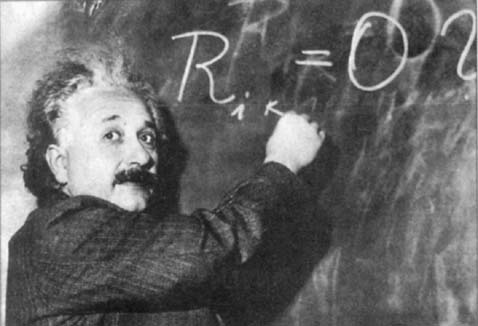
Buddha Weekly | Where science meets Buddhism: emptiness, interconnectivity and the nature of reality
"In this way, you let go of yourself for the sake of dharma without knowing how many thousands of times you do so. You seek dharma for the sake of yourself without knowing in how many billions of eons you do so. This is the vital activity of following a teacher. This is the activity of practicing yourself and following yourself...
To speak of dharma and practice for others is to hear dharma, to clarify dharma, and to realize dharma, birth after birth. If you have a sincere heart in speaking of dharma to others in this birth, your attaining dharma is easy. Or, if you assist and support others hearing dharma, your study of dharma receives a wholesome effect. You receive the effect in your body and in your mind...
This being so, if you hear a phrase from someone in a far-eastern region, speak it for another in a far-western region. Endeavor in hearing and speaking equally with a single self. Practice and realize an east self and a west self.
Rejoice, hope for, and have the aspiration for bringing buddha ancestors' dharma, the ancestral way, closer to your body and mind. Extend this practice from one hour to one day, then to one year and to one lifetime. Make buddha ancestors' dharma the essential spirit and play with it. This is to live your life meaningfully".
from 'Self-Realization Samadhi' ('Jisho Zammai') ~ Dōgen Zenji

Satipatthana
Satipaṭṭhāna is a way of implementing the right mindfulness (sammā-sati) and, less directly, the right concentration (sammā-samādhi) parts of the Noble Eightfold Path. Satipaṭṭhāna meditation develops the mental factors of vipassana (insight) and samatha (calm). Satipaṭṭhāna is practiced most often in the context of Theravada Buddhism although the principles are also practiced in most traditions of Buddhism which emphasize meditation such as the Sōtō Zen tradition.
Anapanasati Sutta
The Ānāpānasati Sutta (Pāli) or Ānāpānasmṛti Sūtra (Sanskrit), 'Breath-Mindfulness Discourse,' is a discourse that details the Buddha's instruction on using the breath (anapana) as a focus for meditation.
buddha 100407
Dharma Wheel & About Dharma
tara 8790 (more)
Vajrapani 100514
Diamond Sutra
buddha cave

first half | more at TheBuddhaPBS's Channel
"Bhutan – Taking the Middle Path to Happiness” is a documentary on the Himalayan Kingdom of Bhutan and its development policy of “Gross National Happiness.
BHUTAN: Taking The Middle Path To Happiness

Derivative work made with two files from Wikipedia Commons -
Vajrapāṇi (from Sanskrit vajra, "thunderbolt" or "diamond" and pāṇi, lit. "in the hand") is one of the earliest bodhisattvas of Mahayana Buddhism. He is the protector and guide of the Buddha, and rose to symbolize the Buddha's power. Vajrapani was used extensively in Buddhist iconography as one of the three protective deities surrounding the Buddha. Each of them symbolizes one of the Buddha's virtues: Manjusri (the manifestation of all the Buddhas' wisdom), Avalokitesvara (the manifestation of all the Buddhas' compassion) and Vajrapani (the manifestation of all the Buddhas' power).
On the popular level, Vajrapani, Holder of the Thunderbolt Scepter (symbolizing the power of compassion), is the Bodhisattva who represents the power of all the Buddhas, just as Avalokitesvara represents their great compassion, Manjushri their wisdom, and Tara their miraculous deeds. For the yogi, Vajrapani is a means of accomplishing fierce determination and symbolizes unrelenting effectiveness in the conquest of negativity. His taut posture is the active warrior pose (pratayalidha), based on an archer's stance but resembling the en garde position in Western fencing. His outstretched right hand brandishes a vajra and his left hand deftly holds a lasso - with which he binds demons. He wears a skull crown with his hair standing on end. His expression is wrathful and he has a third eye. Around his neck is a serpent necklace and his loin cloth is made up of the skin of a tiger, whose head can be seen on his right knee.
According to the Pancavimsatisahasrika and Astasahasrika Prajnaparamita any Bodhisattva on the path to Buddhahood is eligible for Vajrapani's protection, making them invincible to any attacks "by either men or ghosts".
Vajrapāṇi is the patron saint of the Shaolin monastery.
In Japan, Vajrapani is known as Shukongōshin (執金剛神, "Diamond rod-wielding God"), and has been the inspiration for the Niō (仁王, lit. Benevolent kings), the wrath-filled and muscular guardian god of the Buddha, standing today at the entrance of many Buddhist temples under the appearance of frightening wrestler-like statues.
• More on Vajrapāṇi at Wikipedia
• Original post (art development): Vajrapani-100514
• About Mahayana Buddhism at Wikipedia


All conditioned phenomena
Are like dreams, illusions, bubbles, or shadows;
Like drops of dew, or flashes of lightning;
Thusly should they be contemplated.
Click here for an English translation of the Diamond Sutra

 Buddha footprint
त्रिरत्न
The Three Jewels, also called the Three Treasures, the Three Refuges, or the Triple Gem (triratna)), are the three things that Buddhists take refuge in, and look toward for guidance, in the process known as taking refuge.
The Three Jewels are:
• Buddha
Sanskrit, Pali: The Enlightened or Awakened One - Depending on one's interpretation, can mean the historical Buddha (Shakyamuni) or the Buddha nature—the ideal or highest spiritual potential that exists within all beings;
• Dharma
Sanskrit: The Teaching; Pali: Dhamma - The teachings of the Buddha.
• Sangha
Sanskrit, Pali: The Community - The community of those who have attained enlightenment, who may help a practicing Buddhist to do the same. Also used more broadly to refer to the community of practicing Buddhists.
• More about Buddhism on whats more blog
@ Master of the Shakuhachi#zen


Derivative work made with two files from Wikipedia Commons -

Vajrapāṇi (from Sanskrit vajra, "thunderbolt" or "diamond" and pāṇi, lit. "in the hand") is one of the earliest bodhisattvas of Mahayana Buddhism. He is the protector and guide of the Buddha, and rose to symbolize the Buddha's power. Vajrapani was used extensively in Buddhist iconography as one of the three protective deities surrounding the Buddha. Each of them symbolizes one of the Buddha's virtues: Manjusri (the manifestation of all the Buddhas' wisdom), Avalokitesvara (the manifestation of all the Buddhas' compassion) and Vajrapani (the manifestation of all the Buddhas' power).
On the popular level, Vajrapani, Holder of the Thunderbolt Scepter (symbolizing the power of compassion), is the Bodhisattva who represents the power of all the Buddhas, just as Avalokitesvara represents their great compassion, Manjushri their wisdom, and Tara their miraculous deeds. For the yogi, Vajrapani is a means of accomplishing fierce determination and symbolizes unrelenting effectiveness in the conquest of negativity. His taut posture is the active warrior pose (pratayalidha), based on an archer's stance but resembling the en garde position in Western fencing. His outstretched right hand brandishes a vajra and his left hand deftly holds a lasso - with which he binds demons. He wears a skull crown with his hair standing on end. His expression is wrathful and he has a third eye. Around his neck is a serpent necklace and his loin cloth is made up of the skin of a tiger, whose head can be seen on his right knee.
According to the Pancavimsatisahasrika and Astasahasrika Prajnaparamita any Bodhisattva on the path to Buddhahood is eligible for Vajrapani's protection, making them invincible to any attacks "by either men or ghosts".[4]
Vajrapāṇi is the patron saint of the Shaolin monastery.
In Japan, Vajrapani is known as Shukongōshin (執金剛神, "Diamond rod-wielding God"), and has been the inspiration for the Niō (仁王, lit. Benevolent kings), the wrath-filled and muscular guardian god of the Buddha, standing today at the entrance of many Buddhist temples under the appearance of frightening wrestler-like statues.


The Buddha himself entered jhāna, as described in the early texts, during his own quest for enlightenment, and is constantly seen in the suttas encouraging his disciples to develop jhāna as a way of achieving awakening and liberation.
The Buddha's most well-known instructions on attaining jhana are via mindfulness of breathing, found in the Ānāpānasati Sutta and elsewhere.

सिद्धार्थ गौतम
Siddhārtha Gautama was a spiritual teacher from ancient India who founded Buddhism. In most Buddhist traditions, he is regarded as the Supreme Buddha (samyaksaṃbuddha) of our age, "Buddha" meaning "awakened one" or "the enlightened one." The time of his birth and death are uncertain: most early 20th-century historians dated his lifetime as c. 563 BCE to 483 BCE, but more recent opinion dates his death to between to between 486 and 483 BCE or, according to some, between 411 and 400 BCE. Gautama, also known as Śākyamuni ("Sage of the Śākyas"), is the primary figure in Buddhism, and accounts of his life, discourses, and monastic rules are believed by Buddhists to have been summarized after his death and memorized by his followers. Various collections of teachings attributed to him were passed down by oral tradition, and first committed to writing about 400 years later. He is also regarded as a god or prophet in other religions such as Hinduism, the Ahmadiyya Muslim Community and the Bahá'í faith.
tara 8790 (more)
tara (110921)
Vajrapani 100514
Diamond Sutra
Dharma Wheel & About Dharma
buddha cave
• whats more: more about Buddhism & Zen
• Wikipedia
Buddhism
The Buddha
Siddhārtha Gautama

 Posts
All Comments
Posts
All Comments


.jpg)