Posts
Posts


Showing posts with label digital. Show all posts
Showing posts with label digital. Show all posts
Friday, February 24, 2017
Thursday, February 23, 2017
Golden Eagle & Red Shoulder Hawk - playing in photoshop … not finished?
playing in photoshop … working copies, not finished yet?
golden eagle & red shouldered hawk
Golden Eagle

created from –

Red Shouldered Hawk
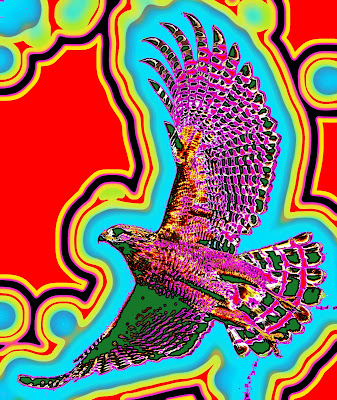
created from –

on Facebook –
playing in photoshop – golden eagle & red shouldered hawk
 UPDATE ::: images combined to make whats more: hawk chased the eagle
see also: what next: Golden Eagle :: "!!! an eagle was just in the giant oak by our patio … just as i posted the Oceti Sakowin Camp video" | Red Shouldered Hawks
"!!! an eagle was just in the giant oak by our patio - the hawks which are nesting in a pine at the corner of the house had started calling. i looked out the window and saw a hawk landing in the tree, then noticed the gigantic eagle sitting about 40 feet away from my face. wow! …"
golden eagle & red shouldered hawk
Golden Eagle

created from –

original photo* from Wikipedia
* Tony Hisgett from Birmingham, UK
https://
* Tony Hisgett from Birmingham, UK
https://
Red Shouldered Hawk

created from –

original photo* from Wikipedia
* photo by "Gouldingken"
on Facebook –
playing in photoshop – golden eagle & red shouldered hawk

see also: what next: Golden Eagle :: "!!! an eagle was just in the giant oak by our patio … just as i posted the Oceti Sakowin Camp video" | Red Shouldered Hawks
"!!! an eagle was just in the giant oak by our patio - the hawks which are nesting in a pine at the corner of the house had started calling. i looked out the window and saw a hawk landing in the tree, then noticed the gigantic eagle sitting about 40 feet away from my face. wow! …"
Saturday, March 10, 2012
fukushima one year later

see also:
whats more: Fukushima second explosion | Occupy Nuclear
whats up: Remembering Fukushima And What You Can Do | Risky Reactors & Deadly Waste
original series: whats more: fukushima art
NO NUKES | RE-TOOL NOW
whats up RC'S NUCLEAR BLOG
Wednesday, February 15, 2012
barrel gurdy

new top view, 2/20/12
- an idea that i've been working on for awhile
- there is now a page on it here at whats more
whats more: barrel gurdy
"it uses a hand-cranked wheel to bow playing strings and drones like a hurdy gurdy, but is played with a slide like a Vichitra Veena (as in video) - no gurdy keybox..."
misc set ups & notes
thinking about how to set things up... things to consider

guitar gurdy by Graeme McCormack
what next: HURDY GURDY - Recycled Guitar | AntiQuated Strings | Lute-backed
see also > what next: cello strings, harmonics & spectograms

whats more: barrel gurdy | what next - label: Hurdy Gurdy
Thursday, October 27, 2011
Thursday, September 22, 2011
tara (110921)
new art -
"Tara reconstruction"
final
 |
| "Tara - she is everywhere" |

history
"Tara reconstruction" was created from photo what it is: ripped up (January 18, 2009)
dark!
see also
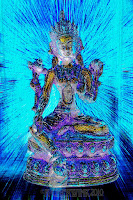
Within Tibetan Buddhism Tara is regarded as a Boddhisattva of compassion and action. She is the female aspect of Avalokitesvara (Chenrezig) and in some origin stories she comes from his tears...
more buddhist art
buddha 100407
tara 8790 (more)
Bhumisparsha Mudrā update
Bhumisparsha Mudrā
Vajrapani 100514
Diamond Sutra
Dharma Wheel & About Dharma
buddha cave
Links
• whats more: more about Buddhism
• Wikipedia
Tara
Wednesday, August 3, 2011
Tuesday, May 17, 2011
Tuesday, May 10, 2011
abolish atomic

the attached file is suitable for high resolution photo printing at 4 x 6 - please feel free to print some and pass them around :)NOW AVAILABLE FOR PURCHASE AS A PRINT AT deviantArt

> go to whats up for nuclear news

self portrait, roseadjoa
Roseadjoa says waking up isn't easy when living a nightmare ♥
NO NUKES | RE-TOOL NOW
buy a print!
> go to whats up for nuclear news
Friday, April 1, 2011
Thursday, March 3, 2011
The Old Ways


in memorium
R.I.P. Mark Stackhouse
"Now those who recite this Sutra and then try to put it in practice will accumulate merit as countless as the sands of Arizona and Nevada; will help save the planet Earth from total oil slick; will enter the age of harmony of man and nature; will win the tender love and caresses of men, women, and beasts; will always have ripened blackberries to eat and a sunny spot under a pine tree to sit at; and, in the end will win highest perfect enlightenment."
~ Gary Snyder, Smokey The Bear Sutra

- - cover of Gary Snyder's book "The Old Ways" ...or, rather, my version of the cover of Gary Snyder's book (still need to find out who did the original artwork - Thomas H. Pohrt?) These renditions have been created from a photograph of a 30-year old, wrinkled and stained photocopy of the bookcover.
re Snyder: "His work, in his various roles, reflects an immersion in both Buddhist spirituality and nature."

"The Bear Sutra" - Video montage based on the Gary Snyder classic (in Polish; special thanks to Wojciech Jacob Jankowski [see also - whats up: Dumki Jacoba & A Carnival of Revolution])
SMOKEY THE BEAR SUTRA
by Gary Snyder
"Once in the Jurassic about 150 million years ago, the Great Sun Buddha in this corner of the Infinite Void gave a discourse to all the assembled elements and energies: to the standing beings, the walking beings, the flying beings, and the sitting beings--even the grasses, to the number of thirteen billion, each one born from a seed, assembled there: a Discourse concerning Enlightenment on the planet Earth...

"In some future time, there will be a continent called America. It will have great centers of power called such as Pyramid Lake, Walden Pond, Mt. Rainier, Big Sur, Everglades, and so forth; and powerful nerves and channels such as Columbia River, Mississippi River, and Grand Canyon. The human race in that era will get into troubles all over its head, and practically wreck everything in spite of its own strong intelligent Buddha-nature...

"...And if anyone is threatened by advertising, air pollution, television,
or the police, they should chant SMOKEY THE BEAR'S WAR SPELL:
DROWN THEIR BUTTS
CRUSH THEIR BUTTS
DROWN THEIR BUTTS
CRUSH THEIR BUTTS
And SMOKEY THE BEAR will surely appear to put the enemy out with his vajra-shovel."
(...more)

(2009) Fifty years ago this Fall a small press in Kyoto, Japan published an English language book of poems, Riprap, by an unknown, first-time poet and UC Berkeley graduate student, Gary Snyder. It was, along with Allen Ginsberg's Howl and Jack Kerouac's On the Road, one of the books that launched the Beat Generation. It was also the most important book of American nature writing since John Muir's The Mountains of California in 1890, a pioneering work in the brief history of the American Buddhist sensibility, and a set of poems that combined freedom and elegance in a way that opened up new pathways in modern poetry. Join us in celebrating this landmark in American literature and in the cultural life of California.


...AND IN THE END WILL WIN HIGHEST PERFECT ENLIGHTENMENT
* Mark Douglas “Stack” Stackhouse, 55, lost his battle with cancer Aug. 12, 2010.
this post inspired by a photo and comment on Facebook by Wojciech Jacob Jankowski, and his also sending me the Polish video "Sutra Szarego Niedzwiedzia 2nd Hand Beatnix."

[Sonoma Mountain Zen Center, Feb. 26 2011]
"Teraz, wczoraj, sto, tysiąc czy więcej lat temu - tak to właśnie wygląda. Nauczyciel i uczniowie. SMZC, zimowe sesshin, foto - Barbara."
Now, yesterday, a hundred thousand or more years ago - that's how it looks. Teacher and students. SMZC, winter sesshin)
LINKS - -
GARY SNYDER: @Wikipedia | Google search | @YouTube
Department of English, UC Davis
@sites.google.com (American Nature Writing)
SMOKEY THE BEAR SUTRA
by Gary Snyder
Video: Sutra Szarego Niedzwiedzia 2nd Hand Beatnix
Video: Gary Snyder: Celebrating the 50th Anniversary of Riprap
Mark Stackhouse obituary
Wojciech Jacob Jankowski (english [see also - whats up: Dumki Jacoba & A Carnival of Revolution]))
Thursday, January 27, 2011
Tuesday, January 18, 2011
what can a fish know of fire? | Kōan

when i think a question,
i think that i can know an answer;
but what can a fish know of fire?
公案
The kōan is a fundamental part of the history and lore of Zen Buddhism.
A koan consists of a story, dialogue, question, or statement, the meaning of which cannot be understood by rational thinking but may be accessible through intuition. One widely known kōan is "Two hands clap and there is a sound; what is the sound of one hand?" (oral tradition attributed to Hakuin Ekaku, 1686–1769, considered a reviver of the kōan tradition in Japan). The word koan, the name by which the practice is known to the West, comes from the Japanese pronunciation of the Chinese characters (公案).
Direct pointing at the mind of man, seeing one's nature and becoming Buddha.
Hakuin Ekaku (白隠 慧鶴?, January 19, 1685 - January 18, 1768) was one of the most influential figures in Japanese Zen Buddhism. He revived the Rinzai school from a moribund period of stagnation, refocusing it on its traditionally rigorous training methods integrating meditation and koan practice. Hakuin's influence was such that all Rinzai Zen masters today trace their lineage through him, and all modern practitioners of Rinzai Zen use practices directly derived from his teachings.
Scroll calligraphy by Hakuin Ekaku (depicts Bodhidharma). Caption: Jikishin ninshin, Kensho jobutsu: “Direct pointing at the mind of man, seeing one's nature and becoming Buddha.”
Kōans originate in the sayings and events in the lives of sages and legendary figures, usually those authorized to teach in a lineage that regards Bodhidharma (c. 5th–6th century) as its ancestor.
Kōan is used both as a meditation device and as an expression of Enlightenment (satori)– a radical experiential insight into the nature of things and the self alike.
悟
• Satori is a Japanese Buddhist term for enlightenment that literally means "understanding". In the Zen Buddhist tradition, satori refers to a flash of sudden awareness, or individual enlightenment, and is considered a "first step" or embarkation toward nirvana. Satori is typically juxtaposed with the related term kensho, which translates as "seeing one's nature". Kensho experiences tend to be briefer glimpses, while satori is considered to be a deeper spiritual experience.
निर्वाण
• Nirvāna is a central concept in Indian religions - the state of being free from suffering. The word literally means "blowing out" — referring, in the Buddhist context, to the blowing out of the fires of greed, hatred, and delusion.
見性
• Kenshō is a Japanese term for enlightenment experiences. It is most commonly used within the confines of Zen Buddhism.
Literally it means "seeing one's nature" or "true self." It generally "refers to the realization of nonduality of subject and object." Frequently used in juxtaposition with satori (or, "catching on"), there is sometimes a distinction made between the two in that some consider satori to be qualitatively deeper. Kenshō itself has been said to be "...a blissful realization where a person's inner nature, the originally pure mind, is directly known as an illuminating emptiness, a thusness which is dynamic and immanent in the world." Kenshō experiences are tiered, in that they escalate from initial glimpses into the nature of mind, on to an experience of emptiness, and then perhaps on to Buddhahood.
Kōans reflect the enlightened or awakened state of such {enlightened} persons and sometimes confound the habit of discursive thought or shock the mind into awareness.[citation needed] Zen teachers often recite and comment on kōans, and some Zen practitioners concentrate on kōans during meditation. Teachers may probe such students about their kōan practice using "checking questions" to validate an experience of insight (kensho) or awakening. Responses by students have included actions or gestures, "capping phrases" (jakugo), and verses inspired by the kōan.
着語
Jakugo
A Capping Phrase (着語/箸語 jakugo?), or 下語 (agyo?) of a kōan is a proof of solution of the case riddle, but not the solution itself. In Zen Buddhism, kōan is used both as a meditation device and as an expression of Enlightenment (悟り/覚り satori?) – a radical experiential insight into the nature of things and the self alike. A capping phrase is supposedly an articulation of such enlightening experience, most of the time in verse.
V. Sōgen Hori describes the process of the kōan training as follows:
"Rinzai monasteries in Japan vary in the way they conduct kōan practice, but in the Myōshin-ji–Daitoku-ji branch, when a monk has passed a kōan the Zen teacher will instruct him to bring a “capping phrase” ... The monk selects a verse or phrase that expresses the insight he has had while meditating on the kōan. He searches for this capping phrase in one of the several Zen phrase books that have been especially compiled for this purpose. If the monk continues into advanced stages of the Rinzai Zen kōan curriculum, he will receive further literary assignments: the writing of explanations in Japanese, called kakiwake 書き分け, and the composition of Chinese-style poetry, called nenrō 拈弄... The research and writing required to complete kakiwake and nenrō writing assignments can consume considerable amounts of time during the later stages of a monk’s stay in the monastery."
A kōan or part of a kōan may serve as a point of concentration during meditation and other activities, often called "kōan practice" (as distinct from "kōan study", the study of kōan literature). Generally, a qualified teacher provides instruction in kōan practice in private.

In the Wumenguan (Mumonkan), public case #1 ("Zhaozhou's Dog"), Wumen (Mumon) wrote:
"...concentrate yourself into this 'Wú'... making your whole body one great inquiry. Day and night work intently at it. Do not attempt nihilistic or dualistic interpretations."
無
Wú (Chinese traditional: 無, simplified: 无 pinyin: wú ) - Mu in Japanese/Korean, is a negation which has been translated variously as "not," "nothing," "without," "nothingness," "non existent," "non being," or evocatively simply as "no thing." [neutrality is disputed]
Arousing this great inquiry or "Great Doubt" is an essential element of kōan practice. To illustrate the enormous concentration required in kōan meditation, Zen Master Wumen commented
It is like swallowing a red-hot iron ball. You try to vomit it out, but you can't.
As part of the training of teachers, monks, and students, kōan can refer to a story selected from sutras and historical records. They may consist of a perplexing element or a concise but critical word or phrase (話頭 huà-tóu) extracted from the story. It may also refer to poetry and commentary added to the story by later Zen teachers.
Links --
@Wikipedia -
Kōan | Jakugo
Zen Buddhism
Hakuin Ekaku | Bodhidharma
Satori | Nirvāna | Kenshō
External links -
The Gateless Gate - 48 Zen kōans compiled in the early 13th century
Book of Serenity A collection of 100 kōans, originally compiled in the 12th century
see also:
• "...about Zen & Buddhism"
• "autumn wind (not exactly haiku?)"
• Zen Playlist at YouTube
Sunday, December 26, 2010
Friday, December 10, 2010
Monday, September 13, 2010
Dharma Wheel & About Dharma
Dharma Chakra

धर्मचक्र
snippets from Wikipedia, the free encyclopedia, and other various resources
The Dharmacakra (Sanskrit: धर्मचक्र), lit. "Wheel of Dharma" or "Wheel of Law" is a symbol that has represented dharma, the Buddha's teaching of the path to enlightenment, since the early period of Indian Buddhism. It is also sometimes translated as wheel of doctrine or wheel of law. A similar symbol is also in use in Jainism. It is one of the Ashtamangala Symbols.

The Dharmacakra symbol is represented as a chariot wheel (Sanskrit cakram) with eight or more spokes. It is one of the oldest known Buddhist symbols found in Indian art, appearing with the first surviving post-Harappan Indian iconography in the time of the Buddhist king Aśoka. The Dharmacakra has been used by all Buddhist nations as a symbol ever since. In its simplest form, the Dharmacakra is recognized globally as a symbol for Buddhism.

Dharma
Dhárma is a multivalent term of great importance in Indian philosophy and religions. In the context of Hinduism, it means one's righteous duty, and a Hindu's dharma is affected by the person's age, class, occupation, and gender. In modern Indian languages it can be equivalent simply to religion, depending on context. The word dharma translates as that which upholds or supports, and is generally translated into English as "law."
According to the various Indian religions, such as Hinduism, Buddhism, Jainism, and Sikhism, beings that live in accordance with Dharma proceed more quickly toward dharma yukam, moksha or nirvana (personal liberation). The antonym of dharma is adharma meaning unnatural or immoral.
Dharma also refers to the teachings and doctrines of the founders of Buddhism and Jainism, the Buddha and Mahavira. In Buddhist philosophy, dhamma/dharma is also the term for "phenomenon".
For practicing Buddhists, references to "Dharma" or Dhamma in Pali, particularly as "the" Dharma, generally means the teachings of the Buddha, commonly known throughout the East as Buddha-Dharma.
The status of Dharma is regarded variably by different Buddhist traditions. Some regard it as an ultimate truth, or as the font of all things which lies beyond the 'three realms' (Sanskrit: tridhatu) and the 'wheel of becoming' (Sanskrit: bhavacakra), somewhat like the Christian logos: this is known as Dharmakaya (Sanskrit). Others, who regard the Buddha as simply an enlightened human being, see the Dharma as the essence of the '84,000 different aspects of the teaching' (Tibetan: chos-sgo brgyad-khri bzhi strong) that the Buddha gave to various types of people, based upon their individual propensities and capabilities.
धर्मकाय
The Dharmakāya (Sanskrit: धर्म काय; Pali: धम्म कय, lit. "truth body" or "reality body") is a central idea in Mahayana Buddhism forming part of the Trikaya doctrine that was possibly first expounded in the Aṣṭasāhasrikā prajñā-pāramitā (The Perfection of Insight In Eight Thousand Verses), composed in the 1st century BCE. It constitutes the unmanifested, "inconceivable" (Sanskrit: acintya) aspect of a Buddha, out of which Buddhas – and indeed all "phenomena" (Sanskrit: dharmas) – arise, and to which they return after their dissolution.
"Dharma" usually refers not only to the sayings of the Buddha, but also to the later traditions of interpretation and addition that the various schools of Buddhism have developed to help explain and to expand upon the Buddha's teachings. For others still, they see the Dharma as referring to the "truth," or the ultimate reality of "the way that things really are" (Tib. Cho).
 The Dharma is one of the Three Jewels of Buddhism
in which practitioners of Buddhism seek refuge, or that upon which one relies for his or her lasting happiness. The Three Jewels of Buddhism are the Buddha, meaning the mind's perfection of enlightenment, the Dharma, meaning the teachings and the methods of the Buddha, and the Sangha, meaning those awakened beings who provide guidance and support to followers of the Buddha.
Buddha footprint
1st century CE, Gandhara; historical display at Zenyōmitsu-ji (善養密寺), a Buddhist Temple located in the Setagaya ward of Tokyo, Japan. --The bottom symbol is the Triratna or "Three Jewels,", - the top symbol is a dharmachakra.
त्रिरत्न
The Three Jewels,
also called the Three Treasures, the Three Refuges, or the Triple Gem (triratna)), are the three things that Buddhists take refuge in, and look toward for guidance, in the process known as taking refuge.
The Three Jewels are:
• Buddha
Sanskrit, Pali: The Enlightened or Awakened One - Depending on one's interpretation, can mean the historical Buddha (Shakyamuni) or the Buddha nature—the ideal or highest spiritual potential that exists within all beings;
• Dharma
Sanskrit: The Teaching; Pali: Dhamma - The teachings of the Buddha.
• Sangha
Sanskrit, Pali: The Community - The community of those who have attained enlightenment, who may help a practicing Buddhist to do the same. Also used more broadly to refer to the community of practicing Buddhists.
see also
more buddhist art
buddha 100407
tara 8790 (more)
tara (110921)
Bhumisparsha Mudrā update
Bhumisparsha Mudrā
Vajrapani 100514
Diamond Sutra
buddha cave
Links
• whats more: more about Buddhism
• Wikipedia
Dharma Wheel
Dharma
Dharmakāya
The Three Jewels
Tuesday, July 20, 2010
hazardous

"hazardous - do not use!"

what next: Dirty Secrets - toxics in household products
New report finds secret toxic chemicals in brand name cleaners
Subscribe to:
Posts (Atom)