Thursday, June 23, 2011

Bhumisparsha Mudrā | Young Urban Zen | Dalai Lama | Science meets Buddhism


Bhumisparsha Mudrā


Bhumisparsha Mudrā | photo of statue, June 23, 2011

Siddhartha resisted every temptation Mara could devise. The lord of desire had one final test. He demanded to know who would testify that Siddhartha was worthy of attaining ultimate wisdom. And his demon army rose up to support him. Siddhartha said nothing. He reached down and touched the ground, and the earth shuddered. Mara’s demons fled.


see also: Bhumisparsha Mudrā update 7/17 -
whats more: Bhumisparsha Mudrā update | Life of Zen


earth touching
This gesture calls upon the earth to witness Shakyamuni Buddha's enlightenment at Bodh Gaya. The right hand reaches toward the ground, palm inward.
मुद्रा
A mudrā (Sanskrit: मुद्रा "seal", "mark", or "gesture") is a symbolic or ritual gesture in Hinduism and Buddhism. While some mudrās involve the entire body, most are performed with the hands and fingers. A mudrā is a spiritual gesture and an energetic seal of authenticity employed in the iconography and spiritual practice of Indian religions and traditions of Dharma and Taoism.


TheBuddhaPBS's Channel - THE BUDDHA: Enlightenment, part 2

Jane Hirshfield, poet: "He sat down under a bodhi tree in the shelter of the natural world in all of its beauty and fullness, and he said I will not move from this place until I have solved my problem."

“Let my skin and sinews and bones dry up, together with all the flesh and blood of my body! I welcome it! But I will not move from this spot until I have attained the supreme and final wisdom."

All at once, Mara, lord of desire, rose to challenge him. With an army of demons he attacked. Siddhartha did not move, and their weapons turned into flowers.

D. Max Moerman, scholar: "Mara is the ruler of this realm of desire, this world that we all live in and what he’s afraid Siddhartha is going to do when he attains enlightenment and becomes the Buddha is conquer that world, that is he’s going to do away with desire. He’s going to wreck the whole game."

Mara did not give up. He sent his three daughters to seduce him. Siddhartha remained still.

Mark Epstein, psychiatrist: "When he faces Mara he faces himself and his own destructive capacity. But he’s not the warrior trying to do battle with those qualities. He has discovered his own capacity for equanimity. He has become like the top of the Great Himalayan Mountains; the weather is passing over him, storms are raging around him, and he sits like the top of the mountain impassive, not in a trance state, you know, totally aware of everything. So he frustrates Mara."


TheBuddhaPBS's Channel - THE BUDDHA: Enlightenment, part 3

Siddhartha resisted every temptation Mara could devise. The lord of desire had one final test. He demanded to know who would testify that Siddhartha was worthy of attaining ultimate wisdom. And his demon army rose up to support him. Siddhartha said nothing. He reached down and touched the ground, and the earth shuddered. Mara’s demons fled.

W.S. Merwin, poet: "The Buddha reaches down, and with his finger, touches the earth. He says, 'The earth is my witness.' He said, 'Mara, you are not the earth. The earth is right here beneath my finger,' and the earth is what we're talking about. Accepting the earth, not owning the earth, not possessing the earth, but the earth just as it is, abused and exploited and despised and rejected and, plowed and mined and shat on and everything else, you know. It's still the earth, and it is, we owe everything to it."

Siddhartha meditated throughout the night, and all his former lives passed before him.

Robert Tenzin Thurman, scholar: "He remembered all his previous lives—infinite number of lives—female and male and every other race and every other being in the vast ocean of life forms. And he remembered all that viscerally so that means his awareness expanded until all the moments of the past were completely present to him."

D. Max Moerman, scholar: "He gains the power to see the process of birth, death, and rebirth that all creatures go through. He’s given this sort of cosmic vision of the workings of the entire universe."

As the morning star appeared, he roared like a lion. "My mind," he said, "is at peace." The heavens shook, and the Bodhi tree rained down flowers. He had become the “awakened one”—the Buddha.

Mark Epstein, psychiatrist: "Something new opens up for him which he calls Nirvana, which he calls Awakening."

Jane Hirshfield, poet: "He said, at this moment all beings and I awaken together. So it was not just him. It was all the universe. He touched the earth. 'As earth is my witness. Seeing this morning star, all things and I awaken together.'"

Thurman: "It’s not like entering a new state; it’s uncovering or surrendering to the reality that has always been there. He realized he’d always been in Nirvana that Nirvana was always the case; your reality itself is Nirvana. It’s the unreality; it’s your ignorance that makes you think you’re this self-centered separate being trying to fight off an overwhelming universe and failing. You are that universe."

Epstein: "You’re already enlightened. He’s saying the capacity for enlightenment, that your awake-ness already exists within you."

Hirshfield: "Nirvana is this moment seen directly. There is no where else than here. The only gate is now. The only doorway is your own body and mind. There’s nowhere to go. There’s nothing else to be. There’s no destination. It’s not something to aim for in the afterlife. It’s simply the quality of this moment."

Merwin: "Just this, just this, this room where we are. Pay attention to that. Pay attention to who's there, pay attention to what isn't known there, pay attention to what is known there, pay attention to what everyone is thinking and feeling, what you're doing there, and pay attention. Pay attention."


Young Urban Zen - City Center - San Francisco Zen Center


"Young Urban Zen is a new group under the auspices of the San Francisco Zen Center, with a particular focus on those between 25 and 35. We’ll be meeting Monday nights to meditate together, discuss our experience of Zen practice, and find out what makes it worthwhile for us. The group is built on the notion that, if you’re going to study yourself, then it’s a good idea to engage with other people who are doing the same."

• Young Urban Zen Facebook page


Peace Through Inner Peace - His Holiness the Dalai Lama, public talk


His Holiness the Dalai Lama's public talk given at the University of Minnesota in Minneapolis, Minnesota, USA, on May 8, 2011. Prior to his talk, the University of Minnesota presented an honorary Doctor of Humane Letters degree to His Holiness. (www.dalailama.com)

YouTube - Peace Through Inner Peace - University of Minnesota
Video courtesy of the Tibetan American Foundation of Minnesota and the University of Minnesota.


Where science meets Buddhism: emptiness, interconnectivity and the nature of reality
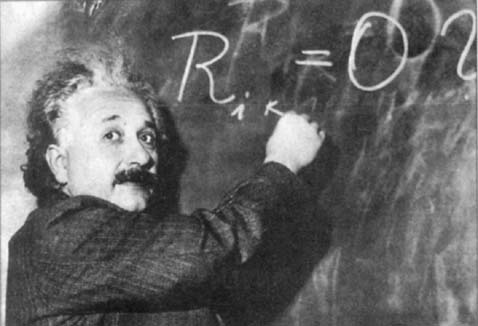

- Buddha Weekly: "'There is a large discrepancy between how we perceive reality and how reality actually exists.' So begins this rather interesting video on the common thread of emptiness, interconnectivity and the nature of reality between Buddhism and Science. Science and Buddhism do often appear to be aligned and non-contradictory, especially given [that] Einstein['s] wrote, in The Human Side, 'If there is any religion that could cope with modern scientific needs it would be Buddhism.'"


Buddha Weekly | Where science meets Buddhism: emptiness, interconnectivity and the nature of reality


more


Tricycle: What makes Buddhism revolutionary?"

Captain Karma vs. The One-Percenters: An Interview with Noah Levine

"This month at the Tricycle Book Club we are discussing Noah Levine's new book, The Heart of the Revolution. Last week, I was very happy to get an opportunity to sit and talk with Noah...


The Ino's Blog: Study Hall - Shobogenzo
June 13, 2011

"In this way, you let go of yourself for the sake of dharma without knowing how many thousands of times you do so. You seek dharma for the sake of yourself without knowing in how many billions of eons you do so. This is the vital activity of following a teacher. This is the activity of practicing yourself and following yourself...

To speak of dharma and practice for others is to hear dharma, to clarify dharma, and to realize dharma, birth after birth. If you have a sincere heart in speaking of dharma to others in this birth, your attaining dharma is easy. Or, if you assist and support others hearing dharma, your study of dharma receives a wholesome effect. You receive the effect in your body and in your mind...

This being so, if you hear a phrase from someone in a far-eastern region, speak it for another in a far-western region. Endeavor in hearing and speaking equally with a single self. Practice and realize an east self and a west self.

Rejoice, hope for, and have the aspiration for bringing buddha ancestors' dharma, the ancestral way, closer to your body and mind. Extend this practice from one hour to one day, then to one year and to one lifetime. Make buddha ancestors' dharma the essential spirit and play with it. This is to live your life meaningfully".


from 'Self-Realization Samadhi' ('Jisho Zammai') ~ Dōgen Zenji


right-mindfulness & breath-mindfulness


Buddha-Bhumisparsha_Mudra-5x7.jpg
work in progress

For final versions see: Bhumisparsha Mudrā update | Life of Zen


Satipatthana
Satipaṭṭhāna is a way of implementing the right mindfulness (sammā-sati) and, less directly, the right concentration (sammā-samādhi) parts of the Noble Eightfold Path. Satipaṭṭhāna meditation develops the mental factors of vipassana (insight) and samatha (calm). Satipaṭṭhāna is practiced most often in the context of Theravada Buddhism although the principles are also practiced in most traditions of Buddhism which emphasize meditation such as the Sōtō Zen tradition.


Anapanasati Sutta
The Ānāpānasati Sutta (Pāli) or Ānāpānasmṛti Sūtra (Sanskrit), 'Breath-Mindfulness Discourse,' is a discourse that details the Buddha's instruction on using the breath (anapana) as a focus for meditation.


see also 

• Bhumisparsha Mudrā update | Life of Zen

• whats more: Workshop at the Zen Center with Issho Fujita

• Master of the Shakuhachi & about Zen & Buddhism

• more buddhist art -


buddha 100407

Dharma Wheel & About Dharma

tara 8790 (more)

Vajrapani 100514

Diamond Sutra

buddha cave


Wednesday, June 8, 2011

Ram Dass interviews Thicht Nhat Hanh (1995)


YouTube - ‪RamDassChannel's Channel‬‏:


Ram Dass interviews Thicht Nhat Hanh at the State of the World forum, September 1995


Ram Dass is the author of the 1971 bestseller Be Here Now.

His NEW BOOK, Be Love Now, is the third book in a trilogy that began with Be Here Now and was followed by Still Here, Ram Dass's acclaimed work on aging, changing, and dying. In Be Love Now, Ram Dass shares what he has learned in his remarkable four-decade-long spiritual journey. Through timeless teaching stories, compelling and often humorous personal anecdotes, and soul-stirring insights, Ram Dass tracks the stages of his own awakening in his trademark down-to-earth style.

Starting with his days as Harvard psychologist and psychedelic inventurer, continuing through his profound encounters with his guru, Neem Karoli Baba, and moving beyond the reawakening brought on by his near-fatal stroke, Ram Dass shares his life experiences while offering a timeless teaching on love and the path of the heart.
Ram Dass has written 12 other books including Miracle of Love, The Only Dance There Is, and Journey of Awakening.

Teacher, author and spiritual guide, Ram Dass continues to teach us that compassion and love are the true sources of service, along with living in the present moment.

We will be posting videos of Ram Dass discussions and teachings as they become available. For more in depth discovery and to join Ram Dass' growing online community, please go to our website at www.ramdass.org.

" As I no longer travel to teach, I now share my heart in cyberspace. This site gives us the opportunity to meet through live webcasts and personal webchats. We also have a vast archive of my talks from the 60's through present day. I invite you to participate in our online global satsang and connect with like-minded souls through our Be Here Now social community. To me these are amazing new manifestations of our deeper self. Share this dance with us. "


Zen Master Thich Nhat Hanh

One of the best known and most respected Zen masters in the world today, poet, and peace and human rights activist, Thich Nhat Hanh (called Thây by his students) has led an extraordinary life. Born in central Vietnam in 1926 he joined the monkshood at the age of sixteen. The Vietnam War confronted the monasteries with the question of whether to adhere to the contemplative life and remain meditating in the monasteries, or to help the villagers suffering under bombings and other devastation of the war. Nhat Hanh was one of those who chose to do both, helping to found the 'engaged Buddhism' movement. His life has since been dedicated to the work of inner transformation for the benefit of individuals and society.

In Saigon in the early 60s, Thich Nhat Hanh founded the School of Youth Social Service, a grass-roots relief organization that rebuilt bombed villages, set up schools and medical centers, resettled homeless families, and organized agricultural cooperatives. Rallying some 10,000 student volunteers, the SYSS based its work on the Buddhist principles of non-violence and compassionate action. Despite government denunciation of his activity, Nhat Hanh also founded a Buddhist University, a publishing house, and an influential peace activist magazine in Vietnam.
The Most Venerable Thich Nhat Hanh (Thây), our spiritual teacher, founded the Unified Buddhist Church (Eglise Bouddhique Unifieé) in France in 1969, during the Vietnam war. Thich Nhat Hanh is a Vietnamese Buddhist monk, a poet, a scholar, and a peace activist. His life long efforts to generate peace and reconciliation moved Martin Luther King, Jr. to nominate him for the Nobel Peace Prize in 1967. He founded the Van Hanh Buddhist University in Saigon and the School for Youths of Social Services in Vietnam. When not travelling the world to teach “The Art of Mindful Living”, he teaches, writes, and gardens in Plum Village, France, a Buddhist monastery for monks and nuns and a mindfulness practice center for lay people.

The Unified Buddhist Church established Sweet Potatoes Community in 1975, Plum Village in 1982, the Dharma Cloud Temple and the Dharma Nectar Temple in 1988, and the Adornment of Loving Kindness Temple in 1995. Thich Nhat Hanh’s sangha (community of practice) in France is usually referred to as the Plum Village Sangha.


see also: what next: must see: The Great Bell Chant | Thich Nath Hanh, Gregory Colbert, Phap Niem

update: ashes & snow - the video collage of Gregory Colbert's photos and with Thich Nath Hanh Phap Niem - "The Great Bell Chant (Simple wish)" was taken offline by the user. now i find this -


Friday, May 27, 2011

The Art of the Buddha | Gross National Happiness


PBS Arts : The Art of the Buddha


Across two and a half millennia, the life of the Buddha has been depicted in art rich in beauty and complexity. Most paintings and sculptures focus on key episodes in his spiritual journey: his birth and childhood, his renunciation of worldly life, his enlightenment, his first teaching, his life as a teacher, and his death.


The Buddha | PBS


first half | more at TheBuddhaPBS's Channel

This documentary for PBS by award-winning filmmaker David Grubin and narrated by Richard Gere, tells the story of the Buddha’s life, a journey especially relevant to our own bewildering times of violent change and spiritual confusion. It features the work of some of the world’s greatest artists and sculptors, who across two millennia, have depicted the Buddha’s life in art rich in beauty and complexity. Hear insights into the ancient narrative by contemporary Buddhists, including Pulitzer Prize winning poet W.S. Merwin and His Holiness the Dalai Lama. Join the conversation and learn more about meditation, the history of Buddhism, and how to incorporate the Buddha’s teachings on compassion and mindfulness into daily life."


Gross National Happiness

"Bhutan – Taking the Middle Path to Happiness” is a documentary on the Himalayan Kingdom of Bhutan and its development policy of “Gross National Happiness.

Imagine a country where the peoples’ happiness is the guiding principle of government. Imagine a people who see all life as sacred, a land with abundant renewable energy, a nation committed to preserving nature and its culture. Imagine a country where the government’s goal is “Gross National Happiness.” Where is this Shangri-La? Bhutan.


But can a place like Bhutan really exist? Can such ideals be realized? Can this small, geographically isolated country tucked away in the Himalayans truly protect its environment and culture as they open their doors to the West?”

The concept of taking “the middle path” is one rooted in the Bhutanese view of the world, a simple message: happiness lies in the middle path. Neither overindulging in the world’s pleasures nor rejecting the world’s goodness can lead to a prosperous and peaceful society. Happiness can only be found by taking the middle path – the path that provides the needs of mankind without sacrificing the life generating diversity of nature.

But now with Bhutan’s entry into the global marketplace, the introduction of television, advertising and the social pressures of consumerism can Bhutan maintain this delicate balance?

BHUTAN: Taking The Middle Path To Happiness

Wednesday, May 25, 2011

Japanese gardens & Moss Diversity | Lichens


Japanese gardens: a haven for moss diversity | OurWorld 2.0


by Yoshitaka Oishi on May 25, 2011
Keywords: Japan, moss, traditional knowledge, urban ecosystem

When I mention my research on moss (bryophytes), it’s not unusual to be asked “why do you study moss?” Such questions likely arise because, for many, moss is considered to be of little use. However, in reality, moss plays a vital role within ecosystems and is valued as a biological indicator of the environment."

Our World 2.0
Solutions to the global challenges of climate change, food security, biodiversity loss and peak oil are within our reach. The Our World 2.0 web magazine shares the ideas and actions of citizens around the world who are transforming our lives for the better.
This award-winning web magazine, produced by United Nations University Media Studio, exchanges these insights through video briefs, articles, debates, photo essays and public events. We invite you to contribute to this growing global conversation.


USGS Release: Lichens May Aid in Combating Deadly Chronic Wasting Disease in Wildlife
5/17/2011

MADISON, Wis. – Certain lichens can break down the infectious proteins responsible for chronic wasting disease (CWD), a troubling neurological disease fatal to wild deer and elk and spreading throughout the United States and Canada, according to U.S. Geological Survey research published today in the journal PLoS ONE.

The researchers found that lichens have great potential for safely reducing the number of prions because some lichen species contain a protease enzyme (a naturally produced chemical) capable of significantly breaking down prions in the lab.

"This work is exciting because there are so few agents that degrade prions and even fewer that could be used in the environment without causing harm," said Jim Bennett, Ph.D., a USGS lichenologist and a co-author of the study.


Saturday, May 21, 2011

Night Photography on QUEST: Steven Christenson

Your Photos on QUEST: Steven Christenson - KQED QUEST Video: "Most nature photographers put their cameras away at night. Not Steven Christenson. As the co-founder of the very successful Bay Area Night Photography group, he guides like-minded, low-light photographers to find interesting subjects after the sun goes down. Steven reveals his special process of photographing star trails for Your Photos on QUEST."


QUEST on KQED Public Media.

Friday, May 13, 2011

The Ino's Blog: Counting To Nine | Zen Mind, Beginner's Mind


you are already Buddha yourself
  ~ Shunryu Suzuki Roshi


The Ino's Blog: Counting To Nine
Wednesday, May 11, 2011
Counting To Nine
I bought myself another copy of Zen Mind, Beginner's Mind, and I was looking for the explanation of why we do nine prostrations at the beginning of morning service instead of three, which I have heard here many times over the years: Suzuki Roshi thought American students were more stubborn than Japanese and needed more help in letting go of the ego.

Zen Mind, Beginner's Mind is a book of teachings by the late Shunryu Suzuki, a compilation of talks given to his satellite Zen center in Los Altos, California. Published in 1970 by Weatherhill, the book is not academic. These are frank and direct transcriptions of Suzukis' talks recorded by his student Marian Derby. Trudy Dixon and Richard Baker—Baker was Suzuki's successor—edited the talks by choosing those most relevant, arranging them into chapters. According to some, it has become a spiritual classic, helping readers to steer clear from the trappings of intellectualism.

PDF

In the book we read,
'After zazen we bow to the floor nine times. By bowing, we are giving up ourselves. To give up ourselves means to give up our dualistic ideas. So there is no difference between zazen practice and bowing. Usually to bow means to pay our respects to something which is more worthy of respect than ourselves. But when you bow to Buddha you should have no idea of Buddha, you just become one with Buddha, you are already Buddha yourself.'
- These last two sentences are ones I should probably memorise, as I often find myself answering a question around this from new students or visiting high school kids - if there is no god in Buddhism, why are you bowing, who are you bowing to?"
  ~ more


Shunryu Suzuki (鈴木 俊隆 Suzuki Shunryū, dharma name Shōgaku Shunryū 祥岳俊隆) (May 18, 1904 – December 4, 1971) was a Sōtō Zen roshi (Zen Master) who popularized Zen Buddhism in the United States, particularly around San Francisco. Born in the Kanagawa Prefecture of Japan, Suzuki was occasionally mistaken for the Zen scholar D.T. Suzuki, to which Shunryu would reply, "No, he's the big Suzuki, I'm the little Suzuki."


Suzuki Roshi dot org (suzukiroshi.org)

•   Suzuki Roshi Dharma Talks

•   Suzuki Roshi Verbatim transcripts

Shunryu Suzuki Roshi on YouTube

•   "Zen Mind Beginners Mind"

San Francisco Zen Center

The purpose of San Francisco Zen Center is to make accessible and embody the wisdom and compassion of the Buddha as expressed in the Soto Zen tradition established by Dogen Zenji in 13th-century Japan and conveyed to us by Suzuki Roshi and other Buddhist teachers. Our practice flows from the insight that all beings are Buddha, and that sitting in meditation is itself the realization of Buddha nature, or enlightenment.
•   Zen Mind, Beginner's Mind
~ by Shunryu Suzuki Roshi

• Shunryu Suzuki-roshi, a Japanese Zen priest belonging to the Soto lineage, came to San Francisco in 1959 at the age of fifty-four. Already a respected Zen master in Japan, he was impressed by the seriousness and quality of "beginner's mind" among Americans he met who were interested in Zen and decided to settle here. As more and more people of non-Japanese background joined him in meditation, Zen Center came into being and he was its first abbot. Under his tutelage, Zen Center grew into City Center, Green Gulch Farm and Tassajara Zen Mountain Center. He was undoubtedly one of the most influential Zen teachers of his time.

"In the beginner's mind there are many possibilities, but in the expert's there are few."

So begins this most beloved of all American Zen books. Seldom has such a small handful of words provided a teaching as rich as has this famous opening line of Shunryu Suzuki's classic. In a single stroke, the simple sentence cuts through the pervasive tendency students have of getting so close to Zen as to completely miss what it's all about. An instant teaching on the first page. And that's just the beginning. In the thirty years since its original publication, Zen Mind, Beginner's Mind has become one of the great modern Zen classics, much beloved, much re-read, and much recommended as the best first book to read on Zen. Suzuki Roshi presents the basics—from the details of posture and breathing in zazen to the perception of nonduality—in a way that is not only remarkably clear, but that also resonates with the joy of insight from the first to the last page. It's a book to come back to time and time again as an inspiration to practice.
Purchase Zen Mind, Beginner's Mind from Zen Center's on-line bookstore.
•   The Ino's Blog

SOTOZEN-NET official site (english)

•   A Message from the Head Priest


ZEN playlist @ rc's youtube channel


TAG THIS PHOTO


ha ha - tag! - you are Buddha!

tag on facebook | buddha artwork by rc


see also:
Master of the Shakuhachi & about Zen & Buddhism

Dharma Wheel & About Dharma

Tuesday, May 10, 2011

abolish atomic


the attached file is suitable for high resolution photo printing at 4 x 6 - please feel free to print some and pass them around :)
NOW AVAILABLE FOR PURCHASE AS A PRINT AT deviantArt


> go to whats up for nuclear news


self portrait, roseadjoa

Roseadjoa says waking up isn't easy when living a nightmare ♥


NO NUKES | RE-TOOL NOW

buy a print!


> go to whats up for nuclear news

Friday, April 15, 2011

the conversation - Depak Chopra homebase


Watch live streaming video from deepakhomebase at livestream.com

the conversation

activating a critical mass where together we can create a peaceful, just, sustainable, healthy & happy world.

co-created by deepak chopra and abc carpet & home ceo paulette cole, deepak HomeBase is both a physical and a virtual salon; a vital, living, interactive, experiential platform; a multi media expanded classroom & a curated conversation, hosted by visionary futurist deepak chopra, with the iconic characters and luminaries of our time.

in a time where humanity is facing some difficult, painful and mysterious questions, deepak’s gift is more relevant than ever, as he is poised to ask the questions, create the inquiry, and host the solutions and the debate. the conversation raises the bar on integrity and intelligence.


see also: @whats up: Deepak Chopra homebase: Fukushima Nuclear Disaster ~ Indian Point, NY